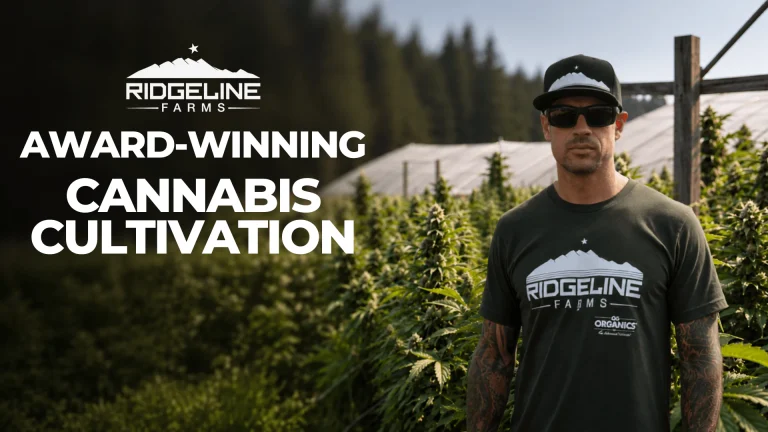
The Reality of Five-Pound Harvests
Achieving 4.5 to 5 pounds per light indoors isn’t just possible, it’s repeatable when you understand the fundamentals.
James Donnelly, a third-generation cultivator who’s been perfecting his craft since age 12, has proven this consistently across multiple facilities.
Recently, founder CEO of Advanced Nutrients, BigMike Straumietis sat down with James for a groundbreaking episode of the Inside Cultivation podcast. We’ve included James’s core strategies in this article for you.
BigMike tells James in the episode, “It’s been confirmed by multiple people that yes, indeed, you are the five pound guy.”
At just 27 years old, James brings decades of inherited wisdom from Humboldt County’s legacy growers, combined with cutting-edge commercial cultivation techniques.
His grandfather co-authored Sinsemilla Tips in the 1970s, and James has carried that tradition of excellence into today’s regulated market.
Environment: The Foundation of Success

James is direct about what drives elite yields: “80 to 90% of it is really your environmentals.”
Without dialed-in environmental controls, even the best genetics and nutrients can’t reach their potential.
Temperature Management
James runs different temperature protocols for HPS versus LED systems:
HPS Systems:
- Vegetative stage: 77°F
- Flowering: Ramp up to 81-82°F by week 3-4
- Late flower: Bring back down by weeks 5-6
LED Systems:
- Higher ambient temperatures needed: 82°F to start
- Target leaf surface temperature: 84°F minimum
- Compensate for LED’s lower heat output
Humidity Strategy for Bigger Buds
“I run lower humidity than most people with HPS,” James explains. His approach directly impacts yield:
- Clone rooms: 58-59% humidity
- Week 3 flowering: Drop to 50%
- Week 6+: 45-47% humidity
The logic is simple: “Drier rooms, my plants are transpiring more, they’re drinking more, and if they’re drinking more, usually you know, they’re bigger buds.”
CO2: The Game-Changing Protocol
James uses an aggressive CO2 strategy that most growers consider extreme:
- Start at 1,100-1,300 PPM
- Increase by 200-300 PPM each week
- Peak at 2,700-2,800 PPM for HPS systems
- Peak at 1,800-1,900 PPM for LED systems
The key insight: “If you’re bleaching, your CO2 is probably not high enough.”
Rather than reducing light intensity when you see bleaching, James increases CO2 levels to support higher PPFD values.
Light Intensity Integration
James pushes light intensity to levels many consider excessive:
- HPS systems: 1,300-1,700 PPFD
- Higher CO2 levels enable plants to process this intense light
“The more light my plants can absorb,” he says, “the more nutrients they can absorb.”
Plant Management for Maximum Yields

The Two-Topping System
James maximizes each plant through strategic training:
- First topping: When plants go into 4×4 coco cubes
- Second topping: During transition to 2-gallon containers
- Result: Larger plants reaching 6-7 feet at harvest
Root Health: The Hidden Foundation
“The big thing for us that we saw in order to hit those numbers was to never have those roots air prune themselves,” James emphasizes.
Timing is critical:
- Transplant Rockwool clones when roots first appear white and fuzzy
- Move 4×4 cubes to 2-gallon pots before roots brown or circle
- Each delay in transplanting reduces final yield potential
Mother Plant Strategy
James keeps mother plants fresh for optimal cutting quality:
- Never take cuttings from mothers more than twice
- Replace mothers regularly to prevent stress-induced diseases
- “Every plant I make the assumption comes in with some sort of disease“
Advanced Nutrient Strategies
The Advanced Nutrients Advantage
James switched to Advanced Nutrients after extensive testing with other brands.
When it comes to the issue of bioavailable micronutrients in organic systems, James says, “Advanced Nutrients fixed that a long, long time ago”
The key differentiator: “Advanced has the highest ceiling right, the highest potential, because you guys have more inputs. There’s more micronutrients.”
The Cultivator Series Impact

James highlights the transformation after switching to the Cultivator Series: “It’s a night and day difference for us, right? The nose of the weed, the quality of the weed. It’s just not even really comparable.”
Benefits include:
- Enhanced terpene production
- Improved bag appeal and aroma retention
- Cost-effective pricing for commercial operations
- Predictable PPM readings
EC Management Throughout Growth
James uses a graduated feeding approach:
- Clone Stage: 1.3-1.5 EC
- 4×4 Cubes: 1.8-2.2 EC
- Early Flower: 2.2 EC, ramping to 2.6 EC by week 3
- Peak Feeding: 2.4-2.6 EC through week 6
- Late Flower: Drop back to 2.0-2.2 EC by week 7
The Nitrogen Cut Strategy
Here’s where James separates from standard feeding protocols. By week 7, he implements a complete nitrogen elimination:
“We get it to about an 80/20 by week three… and then by you know that week seven or so, I’m at a hundred to zero. So I cut 100% of the nitrogen.”
This forces the plant to:
- Pull nitrogen from fan leaves into developing buds
- Increase bud density and weight
- Achieve proper color fade by harvest
Disease Prevention with Voodoo Juice Plus Tabs
James credits Voodoo Juice Plus Tabs as a game-changer: “It was a game changer for us, it was for the entire industry.”
The benefits:
- Suppresses root-zone diseases like Pythium and Fusarium
- Expands root mass for better nutrient uptake
- Can increase yields by 25-75% depending on disease pressure
- Simple application that irrigation teams appreciate
Harvesting and Post-Harvest Excellence
The Slow Dry Advantage
James prioritizes quality through extended drying periods:
- Target: 14-17 days (not the industry standard 7-10 days)
- Starting conditions: 63°F, 60% humidity
- Day 7: Drop to 60°F, 50% humidity
- Prevents volatilization and weight loss
Hand Trimming for Premium Quality
James says, “I’m a big fan of hand trimming again because I’m hyper fixated on quality above everything else.”
He uses traditional Chikamasa scissors for the cleanest finish.
Technology Integration for Scale
At 818’s 4,500-light facility, James leverages the Growlink system with AI co-pilot functionality:
“The grow link system enables me to really have a bird’s eye view and have a good understanding of what’s going on inside my media at all times.”
This technology allows craft-quality cultivation at commercial scale, something previously thought impossible.
The Philosophy Behind Five-Pound Success

Strain-Specific Dialing
“I really want to be in the rooms watching the plants,” says James, “seeing how they’re acting to the little tweaks that I’m making and be agile, be nimble in my decision making.”
Each strain requires 2-3 runs minimum to fully dial in, with some genetics like Lion OG and Sour Slushie proving especially responsive to James’s protocols.
Quality Over Everything
James targets the top 20-30% of the market: “I’m hyper fixated on quality, but in today’s industry, you need to be pulling weight. You’re not going to be successful if you’re not.”
His approach delivers both:
- Yields: 4.5-5 pounds per light with HPS, 3.5-4 with LED
- Quality: Premium flower commanding top-tier pricing
Your Path to Five-Pound Harvests
Achieving these yields requires commitment to excellence across every aspect of cultivation:
- Perfect your environment first: temperature, humidity, CO2, and light intensity must work in harmony
- Time your transplants precisely: never let roots air prune
- Feed strategically: ramp up through flower, then eliminate nitrogen late in the cycle
- Protect your root zone: use beneficial bacteria to suppress diseases
- Stay strain-specific: each genetic responds differently to environmental pressures
James proves that with the right combination of environmental controls, proven nutrients like the Advanced Nutrients Cultivator Series, and meticulous plant management, elite yields are achievable at any scale.
To transform your harvests, explore the complete Advanced Nutrients product line and start building your five-pound-per-light system today.
Please note: the high-performance strategies outlined in this article are designed to work as a complete system. Attempting to replicate individual tactics (like elevated PPFD) without simultaneously dialing in key variables such as VPD and leaf surface temperature can hinder plant performance rather than enhance it.
For more expert cultivation insights and proven strategies from industry leaders, watch the complete James Donnelly interview and subscribe to our Inside Cultivation podcast series.